Licensed & Insured • Serving Philly & the Tri-State
Basement Waterproofing in Philly
✓ 1,500+ five-star reviews • ✓ 22+ years in Philly • ✓ Licensed & insured
Basement Waterproofing in Philly
✓ 1,500+ five-star reviews • ✓ 22+ years in Philly • ✓ Licensed & insured
If your basement smells musty after a storm, or you’ve noticed a damp patch that never quite dries out, you’re not alone. Philly’s older homes, heavy seasonal rain, and clay-heavy soil make basement water intrusion one of the most common problems local homeowners deal with. At Basement Gurus, we’ve spent more than 22 years diagnosing and fixing wet basements across Philly and the surrounding counties — and we start every job the same way: by figuring out exactly where the water is coming from before we recommend a fix.
This page walks through why Philly basements leak, the warning signs worth paying attention to, and the waterproofing solutions that actually solve the problem for good.
Why Philly Homes Struggle With Basement Water
Basement waterproofing looks different here than it does in newer suburbs with modern construction. Philly is full of century-old rowhomes, twins, and townhouses built on stone or brick foundations that were never designed with today’s waterproofing standards in mind. Add in the region’s clay-heavy soil, which holds water instead of draining it, and you get a recipe for chronic moisture problems.
A few local factors show up again and again when we inspect a basement:
- Heavy seasonal rainfall that saturates the ground around older foundations
- Aging stone and brick foundations with mortar joints that have broken down over decades
- Clay soil that expands when wet and pushes against foundation walls
- Hydrostatic pressure from saturated soil forcing water through cracks and joints
- Winter freeze-thaw cycles can expand existing foundation cracks.
- Waterproofing systems installed decades ago that were never updated
None of this means every basement is destined to leak. It does mean that a one-size-fits-all fix rarely holds up in a Philly home — the solution needs to match the home’s age, construction, and the way water is actually reaching it.
Signs You Need Basement Waterproofing
Basement water problems rarely announce themselves all at once. Watch for these warning signs:
- Standing water or puddles on the basement floor
- Damp or discolored walls
- A constant musty smell
- Mold that can be seen on surfaces
- White, chalky mineral deposits on masonry (efflorescence)
- Visible cracks in your foundation walls or flooring
- Walls displaying signs of inward movement
- Peeling or bubbling paint
- Higher-than-normal humidity in the basement
If any of these sound familiar, it’s worth having the basement inspected before the issue gets worse. Small cracks and minor dampness are far less expensive to address than a foundation that’s been under pressure for years.
Why Your Basement Is Leaking
Understanding the cause matters just as much as fixing the symptom. In our experience working on Philly’s homes, basement leaks usually trace back to one of the following:
Hydrostatic pressure pushing groundwater through walls and floor joints
Poor exterior drainage that lets water pool near the foundation
Clogged or damaged gutters that dump rainwater right along the foundation line
Foundation cracks that widen over time from settling and freeze-thaw cycles
Window well leaks where seals have failed
Poor grading that slopes toward the house instead of away from it
Sewer backup during heavy storms
High groundwater levels, common in low-lying parts of the city
A dehumidifier or a can of masonry sealant might mask one of these problems for a season, but it won’t stop water that’s finding a structural path into your home. That’s why our inspections focus on identifying the actual entry point, not just the symptom.
Our Basement Waterproofing Solutions
There’s no single fix that works for every home. Depending on what we find during your inspection, we’ll recommend one or a combination of the following:
Interior Waterproofing
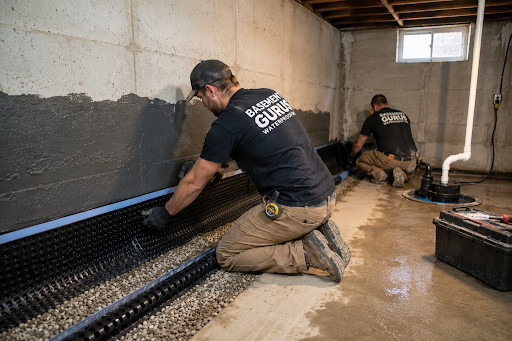
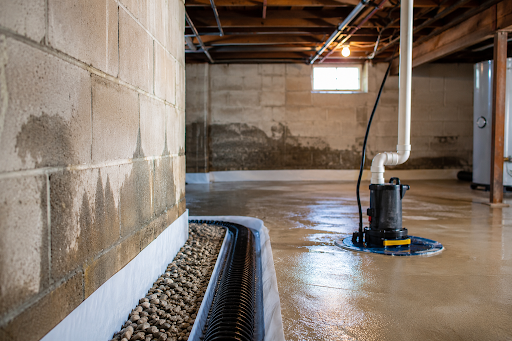
An interior drainage system channels water that reaches the foundation wall into a drain and sump pump, keeping it off your floor. This is often the most practical option for rowhomes and homes without exterior access.
Exterior Waterproofing
By excavating around the foundation, applying a waterproof membrane, and improving drainage, we can stop water before it ever reaches the wall. This approach is common for homes with visible foundation damage or drainage issues.
French Drain Installation
A French drain redirects groundwater away from your foundation, relieving the hydrostatic pressure that causes leaks and cracks in the first place.
Sump Pump Installation
A properly sized sump pump — ideally with a battery backup — automatically removes water that collects in your drainage system, even during a power outage.
Foundation Crack Repair
We seal active cracks and stabilize walls that show early signs of bowing, addressing the structural issue before it becomes a bigger repair.
Vapor Barriers & Drain Tile Systems
Vapor barriers keep ground moisture from seeping through your basement walls and floor, while drain tile systems move water efficiently to your sump pump.
Crawl Space Waterproofing
Many Philly homes have crawl spaces that trap moisture just as easily as basements do. Sealing and encapsulating a crawl space protects the wood framing above it and improves indoor air quality throughout the house.
Basement Wall Sealing & Dehumidification
For homes dealing with humidity rather than active leaks, wall sealing paired with a properly sized dehumidifier can keep moisture levels in check and protect against mold.
Interior and Exterior Waterproofing: Finding the Right Solution for Your Home
Homeowners often ask which approach is better. The honest answer is that it depends on your home’s construction, your budget, and where the water is actually entering. Here’s a quick side-by-side comparison:
| Comparison | Interior Waterproofing | Exterior Waterproofing |
|---|---|---|
| What it does | Manages water once it reaches the foundation wall, directing it to a drain and sump system. | Stops water before it reaches the wall by sealing and re-routing it away from the foundation. |
| Best for | Rowhomes and homes with little to no yard access, or finished basements you don’t want to disturb outside. | Homes with visible foundation damage, yard access, or grading and drainage problems. |
| Disruption | Work happens inside; landscaping is untouched. | Requires excavation around the foundation. |
| Typical cost | Generally more budget-friendly. | Generally a larger investment due to excavation. |
During your free inspection, we’ll walk you through which option — or combination of options — fits your specific home.
Our Process, From Inspection to Dry Basement
- Free inspection We walk through your basement and assess the current condition.
- Moisture assessment We check humidity levels, wall condition, and drainage patterns.
- Identify water entry points We pinpoint exactly where and how water is getting in.
- Recommend a customized solution You’ll get a clear explanation of your options and an honest, itemized estimate.
- Professional installation and cleanup Our crew completes the work and leaves your home clean, with a lifetime, transferable warranty backing the job.
Built for Philly’s Homes
Every neighborhood in Philly has its own mix of construction styles, and we’ve worked on most of them: historic row homes, twin homes, townhouses, single-family homes, and properties with original stone or brick basements. Older masonry foundations often need a different approach than a poured-concrete foundation in a newer build, and we adjust our recommendations accordingly instead of applying the same fix to every job.
Prevention Tips for Philly Homeowners
A few simple habits can go a long way toward keeping water out between inspections:
- Clean gutters regularly, especially before fall and spring storms
- Extend downspouts so water discharges well away from the foundation
- Keep the soil properly graded to direct water away from the house.
- Repair small foundation cracks before winter freeze-thaw cycles widen them
- Keep basement humidity below 50% to discourage mold growth
- Inspect your basement after any heavy storm
From Dry Basement to Finished Space
Waterproofing isn’t just about avoiding damage — it’s often the first step toward using your basement for something more. Once a basement is reliably dry, it opens the door to basement finishing in Philly: a home gym, a home office, a guest room, an entertainment space, or simply reliable storage that won’t ruin what you put in it. It rarely makes sense to finish a basement before addressing the water problem, since any finished materials installed over an unresolved leak will likely need to be redone.
Long-Term Benefits of Waterproofing Your Basement
- Prevents mold and the health issues that come with it
- Protects your home’s foundation from ongoing structural stress
- Enhances indoor air quality throughout your home
- Expands your home’s usable living space
- Protects stored belongings from water damage
- Can increase your home’s resale value
- Reduces the likelihood of costly emergency repairs down the road
What Basement Waterproofing Costs in Philly
Every basement is different, so pricing depends on the size of the space, the extent of the damage, and which solution fits your home. As a general guide, minor interior drainage work for a small basement tends to fall at the lower end of the range, while a full exterior excavation with foundation repair on a larger home falls at the higher end.
Rather than guessing at a number that may not apply to your house, we provide a clear, itemized estimate after a free, in-person inspection — so you know exactly what you’re paying for and why.
When Waterproofing Alone Isn’t Enough
Occasionally, water intrusion is a symptom of a larger structural issue — a foundation wall that’s bowing, significant settling, or cracks that have widened well beyond hairline size. In these cases, waterproofing addresses the moisture, but foundation repair is needed to stabilize the structure itself. We’ll always tell you plainly if that’s the situation with your home rather than selling a partial fix.
Service Areas
We proudly serve homeowners throughout Philly and the surrounding counties, including:
- Northeast Philly
- South Philly
- Center City
- Roxborough
- Manayunk
- Chestnut Hill
- Germantown
- Mt. Airy
- Fishtown
- Kensington
Don’t see your neighborhood listed? Give us a call — we serve the greater Philly area and the surrounding Tri-State region.
Frequently Asked Questions
It depends on your basement’s size and the cause of the water intrusion. After your free inspection, we’ll provide a detailed, transparent estimate outlining exactly what’s included.
A properly installed system is designed to be a permanent fix. We back our work with a lifetime, transferable warranty, so the protection stays with your home even if you sell it.
It depends on your home’s construction, yard access, and where water is entering. Many Philly rowhomes are better suited to interior systems, while homes with visible foundation damage often need exterior work. We’ll recommend the right fit after inspecting your home.
Waterproofing addresses the moisture that allows mold to grow in the first place. If mold is already present, it should be remediated as part of the project.
Most interior drainage systems rely on a sump pump to move collected water out of your home. We’ll let you know whether your situation calls for one, and recommend a battery backup for added protection.
Yes — in fact, an unfinished basement is often the easiest to work in, since there’s no flooring or drywall to work around.
Older homes with stone or brick foundations are often the ones that benefit most, since their original materials weren’t built to modern waterproofing standards. Addressing water issues early protects the foundation from further deterioration.
Most residential projects are completed within one to three days, depending on the scope of the work. We’ll provide a clear project timeline before the work gets underway.
No. Waterproofing solves the moisture problem; finishing turns the space into usable living area. Waterproofing should always come first.
Talk to a Local Basement Waterproofing Specialist
If your basement is showing any of the warning signs above, it’s easier — and less expensive — to address now than after another storm season. Basement Gurus has spent over 22 years helping Philly homeowners get to the bottom of their water problems and fix them for good. Schedule your free inspection, and we’ll walk your basement with you, explain exactly what’s happening, and lay out honest options with no pressure to decide on the spot.
Call us at 800-834-6584 or email gurusbasement@gmail.com to get started.